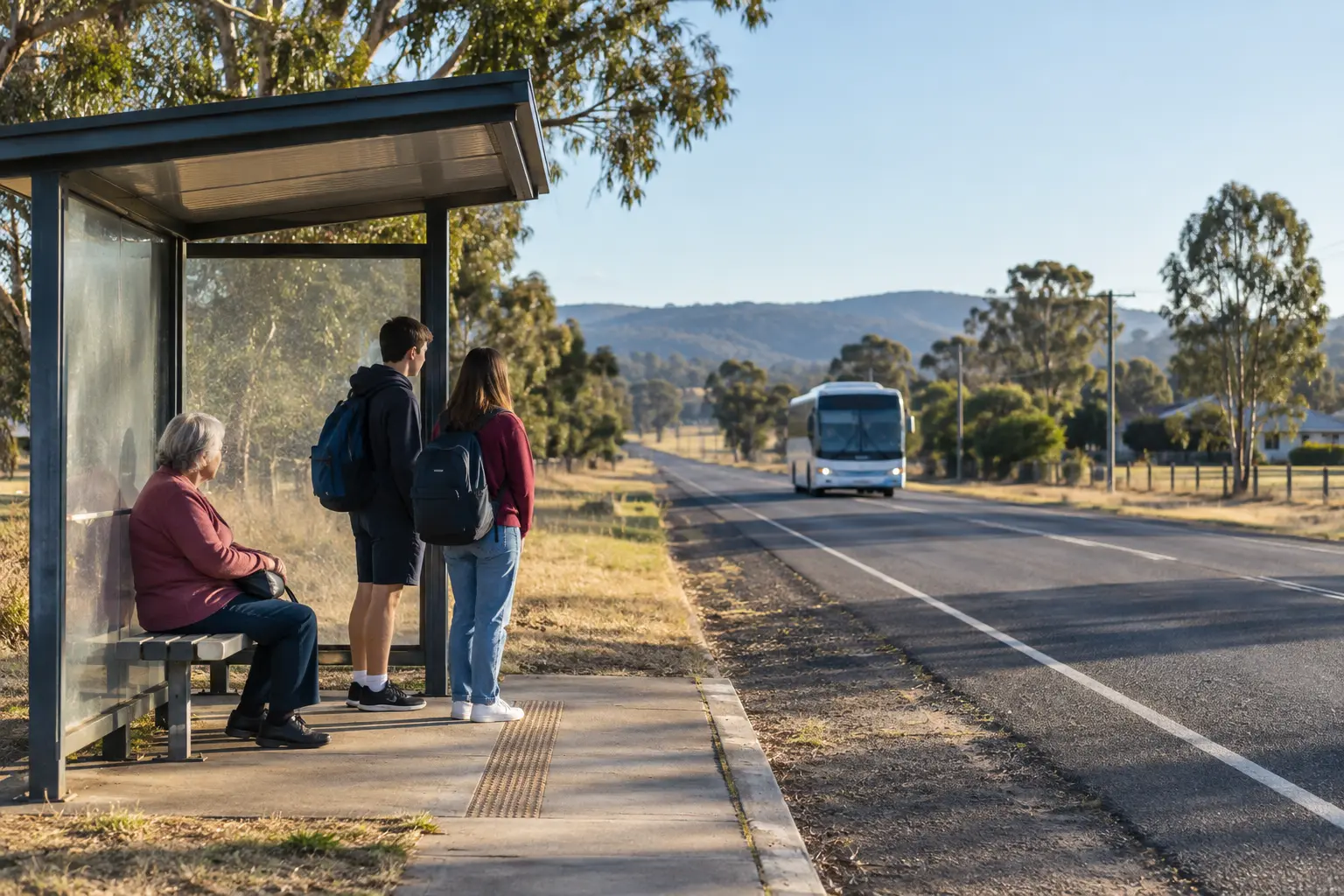
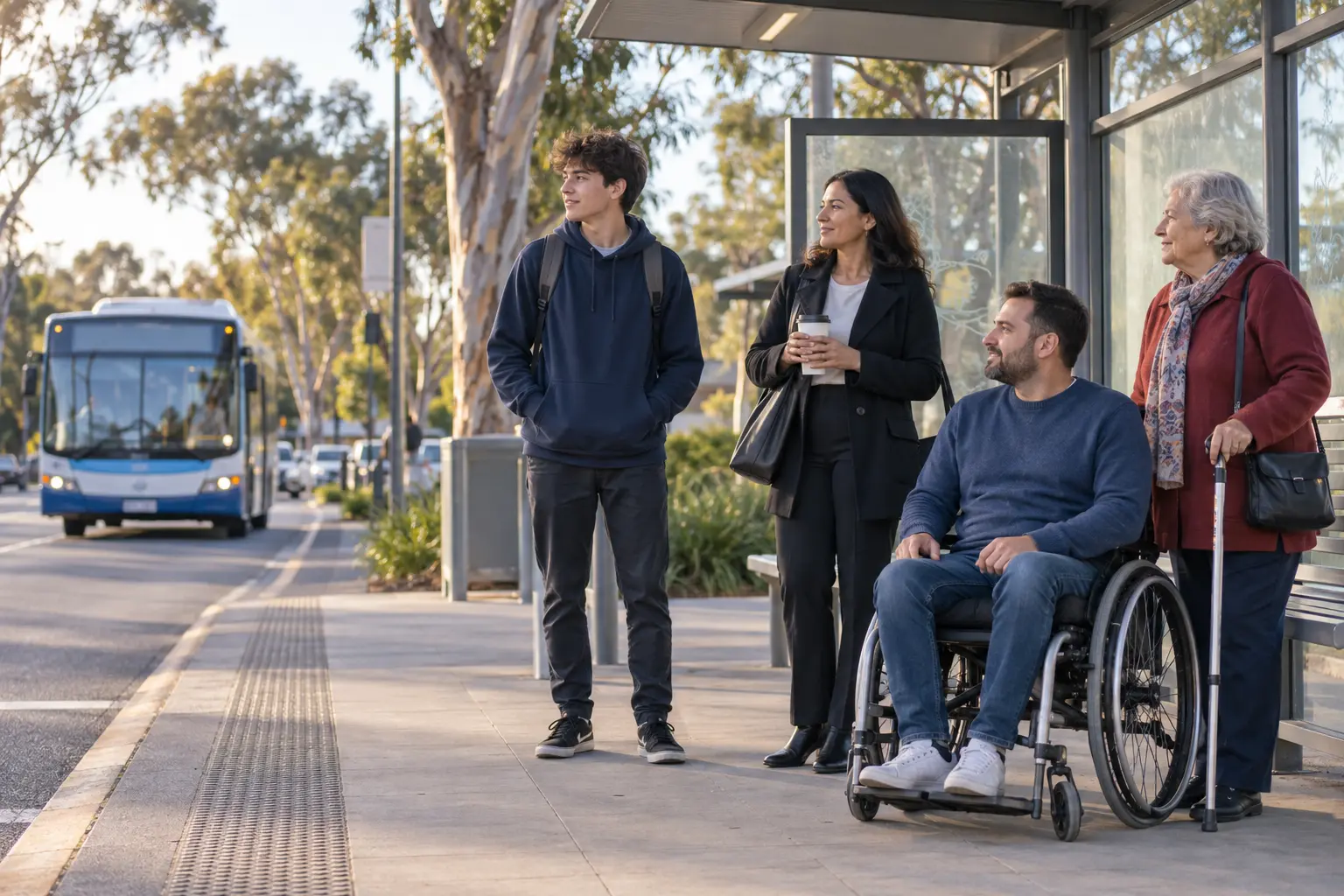
Images are campaign illustrations, not verified photographs of these locations.
Local needs deserve local attention.
Campaign illustration · not a photograph of a reported incident
Campaign priorities
People first. Place by place.
Assess the waiting area, lighting, visibility, accessibility and practical ways to get help. Talk with passengers about the times and conditions that matter to them.
Regional town and rural settings are not whole-LGA crime categories. A report from a town cannot describe every stop across its surrounding district.
Selected examples, not a complete inventory. The spacing and number of cards do not represent frequency, trends or comparative risk. Dates are event dates; publication dates are separate. Allegations are not findings of guilt.
2026-05-28 · Roadside bus stop
Minore Road bus stop, Dubbo
Alleged wounding · Regional NSW · denser towns
A police release describes an alleged knife injury to a girl sitting at the stop. Emergency services were contacted from a different location.
Evidence and limits
NSW Police release reproduced by The National Tribune; bus-stop location explicit.
Selected alleged event; no finding of guilt implied. Only the stop incident is included, not unrelated charges.
Published 2026-06-05; reviewed 2026-10-12. Stop ID not verified.
Official guidance recognises the visibility and accessibility challenges of informal rural school stops. These conditions justify site assessment, but they are not evidence of a crime count or crime trend.
Incident examples concern confirmed public transport bus stops or bus waiting and boarding areas. Roadside stops and interchanges are identified separately. Reports about events aboard buses, in depots or simply near a stop do not establish what happened in the waiting area.
Selected reports illustrate individual events. They are not a complete count, a trend or a comparison of neighbourhood safety. Allegations are not findings of guilt.
Comparable annual bus-stop-only totals have not been established for 1 July 2021–30 June 2026. The examples are dated individually. Broader surveys about underreporting and feeling safe are labelled separately and are not bus-stop crime statistics.
Sydney city means City of Sydney LGA and sits within Greater Sydney. The Greater Sydney boundary includes Central Coast / Gosford. Regional town and low density settings are outside Greater Sydney; they are not whole-LGA density classifications. The five views must not be added together.
Send corrections with a source to petition@saferbusstops.org. Do not send identifying information about children or active investigations. For immediate danger, call 000.
The campaign continues
Help make bus stops safer.
7,491 people signed in just three weeks. The petition is closed; the work to make bus stops safer continues.