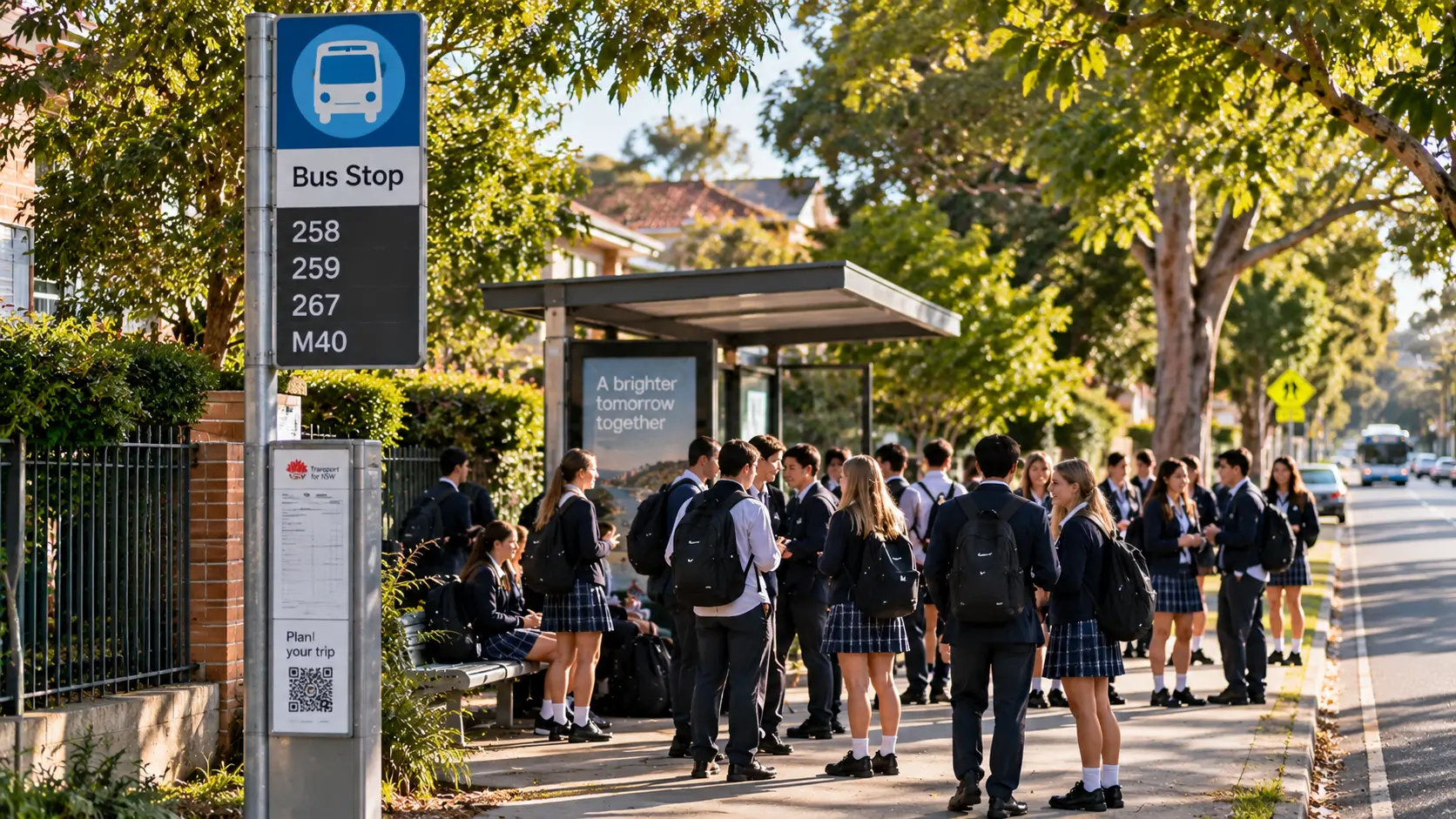
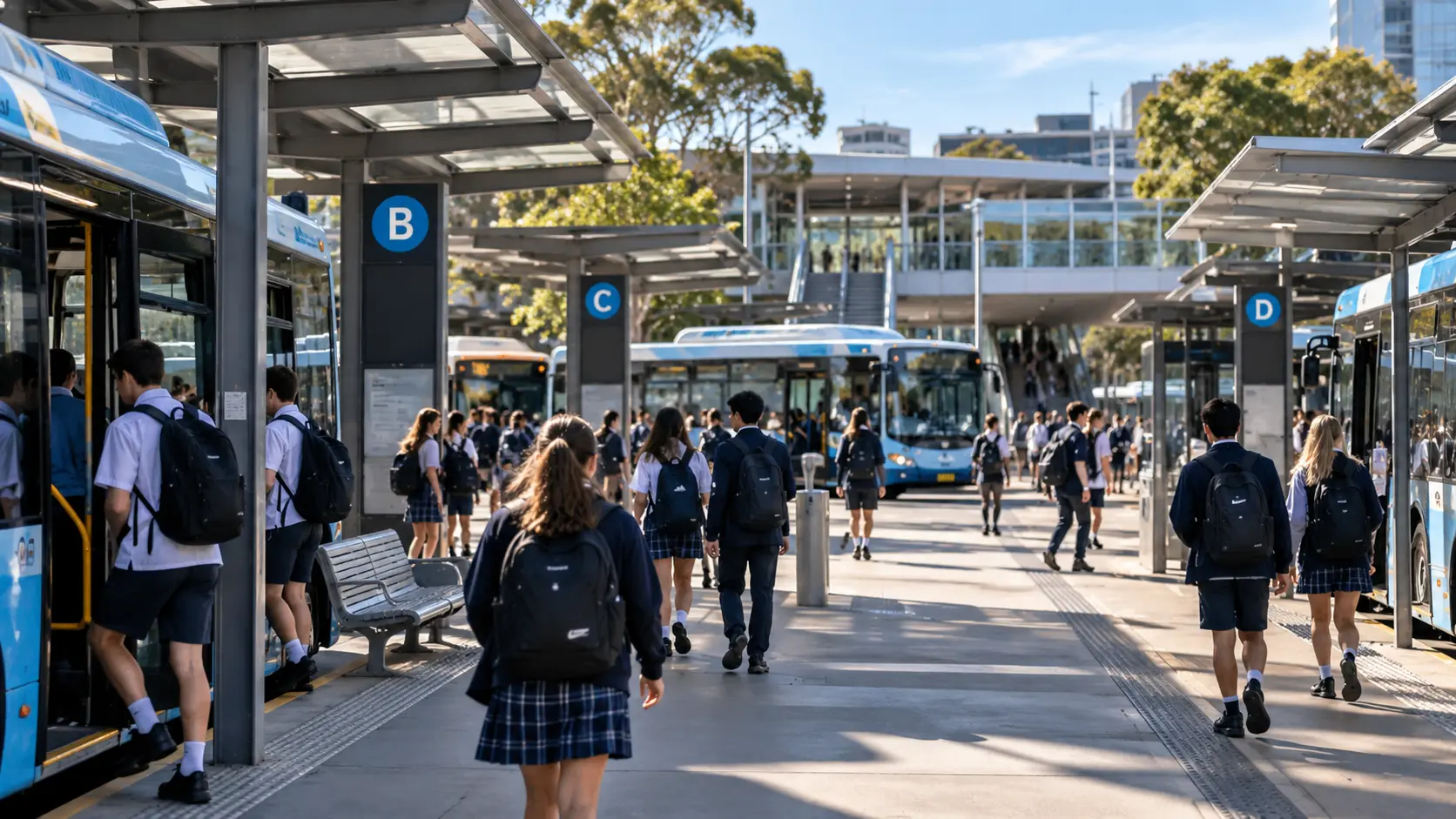
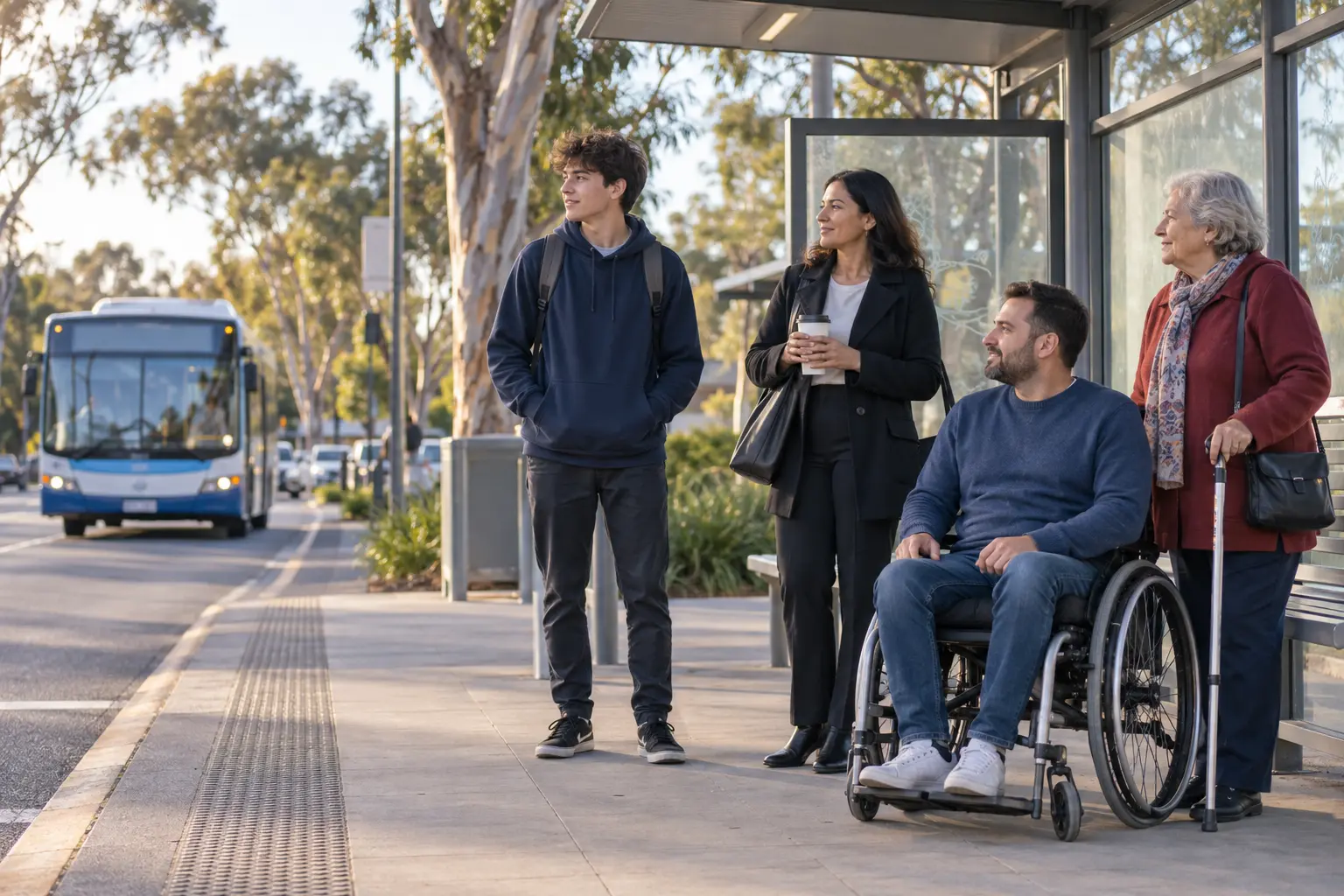
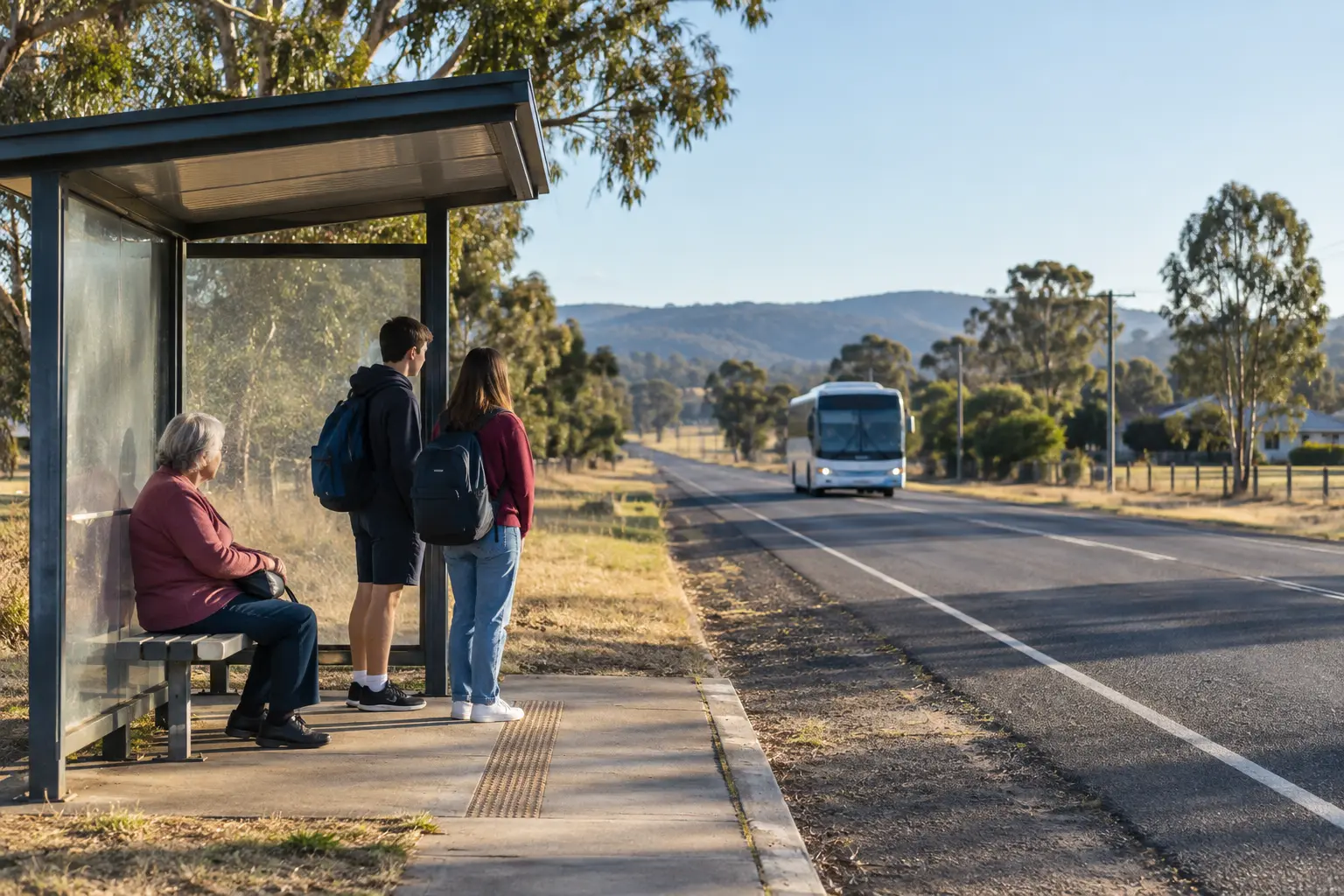
Campaign illustration · not a photograph of a reported incident
Why safer waiting areas matter.
Our focus
Safety starts before the bus arrives.
A school pickup point, a busy interchange and an isolated roadside stop need different assessments. Families, passengers and local communities should help shape the response.
Evidence gap
We need a clearer picture of what happens at stops.
Bus-stop-only data not available in the sources reviewed. The reports below illustrate individual events; they do not show which area is safest or most dangerous.
Safety is more than a police statistic
What goes unreported. What changes a journey.
Underreporting · Australian survey
Almost half did not report.
44%
of people aged 15 and over who experienced physical assault did not report their most recent incident to police, according to the ABS 2024–25 survey.
44% not reported · 56% reported
Recorded incidents cannot tell the whole story. Listening to passengers matters alongside police data.
Australia-wide, all locations. Derived from the ABS reporting rate of 56%; not a measure of all crime or bus-stop underreporting. In 2023–24, the reporting rate was 49%, meaning 51% did not report. These survey estimates cannot be used to double recorded bus-stop totals.
After dark, feeling safe should not be a privilege.
9 in 10
young women surveyed said they sometimes or always felt unsafe in Sydney after dark.
For our campaign, that means asking women what would make waiting for a bus feel safer: better lighting, clear sightlines and practical ways to get help.
Plan International Australia / Ipsos, April 2018: 500 young women aged 18–25 across metropolitan Sydney. The question concerned safety in the city after dark, not bus stops specifically. This is a historical perception survey, not a current crime rate.
Selected examples only; no statewide incident inventory.
Not established is not zero. Bus-stop-only data not available in the sources reviewed. Comparable bus-stop-only annual totals are not available from the sources linked here. Agencies may hold more detailed location information.
Evidence and campaign priorities
Ten priorities for safer bus stops.
01 · NSW · Evidence gap
Make bus-stop incidents visible.
A consistent statewide count should identify what happened in the waiting area, separately from incidents aboard buses or at depots.
The Dubbo report identifies an alleged incident at a Minore Road bus stop. Regional waiting areas deserve the same care in assessment and response.
Read more →06 · Low density areas · Campaign priority
Assess rural waiting conditions.
Visibility, safe standing space and access to help matter at dispersed pickup points. Limited incident information is not a reason to overlook these places.
Underreporting means recorded incidents capture only part of people’s experience. The ABS survey provides context, not a multiplier for bus-stop totals.
Young women’s reported feelings of safety deserve attention alongside incident records. Their experiences should help shape assessments of waiting areas.
Consider lighting, sightlines, accessible waiting space and help arrangements. Assess targeted CCTV where justified, with privacy and maintenance built in.
Selected examples, not a complete inventory. The spacing and number of cards do not represent frequency, trends or comparative risk. Dates are event dates; publication dates are separate. Allegations are not findings of guilt.
2026-01-01 · Bus interchange waiting / boarding area
Bondi Junction Interchange, Stand A
Reported assault · Greater Sydney
A police release describes a man assaulted while waiting to board at Stand A.
Evidence and limits
NSW Police release reproduced by The National Tribune; waiting location explicit.
Selected reported event; subsequent outcome not established; not an official statistical record.
Published 2026-01-20; reviewed 2026-10-12. Stop ID not verified.
Incident examples concern confirmed public transport bus stops or bus waiting and boarding areas. Roadside stops and interchanges are identified separately. Reports about events aboard buses, in depots or simply near a stop do not establish what happened in the waiting area.
Selected reports illustrate individual events. They are not a complete count, a trend or a comparison of neighbourhood safety. Allegations are not findings of guilt.
Comparable annual bus-stop-only totals have not been established for 1 July 2021–30 June 2026. The examples are dated individually. Broader surveys about underreporting and feeling safe are labelled separately and are not bus-stop crime statistics.
Sydney city means City of Sydney LGA and sits within Greater Sydney. The Greater Sydney boundary includes Central Coast / Gosford. Regional town and low density settings are outside Greater Sydney; they are not whole-LGA density classifications. The five views must not be added together.
Send corrections with a source to petition@saferbusstops.org. Do not send identifying information about children or active investigations. For immediate danger, call 000.
The campaign continues
Help make bus stops safer.
7,491 people signed in just three weeks. The petition is closed; the work to make bus stops safer continues.